
Preventing Piles: The Diet and Toilet Habits That Actually Matter
Most advice about preventing piles is vague and easily ignored. This is the specific, practical version — how much fibre, how much water, how long on the toilet, and what to change if you sit for a living.
Almost every patient who has had piles treated is told to “eat more fibre and drink more water”. Almost none are told how much, in what form, or what else matters. The advice is correct but so unspecific that it is easy to feel you are following it while changing nothing.
Here is the version that is actually actionable — and it applies equally to preventing piles in the first place and to preventing recurrence after treatment.
The mechanism you are trying to interrupt
Haemorrhoids become symptomatic through repeated straining. Straining raises pressure in the anal cushions, engorges them, and progressively stretches the tissue that anchors them in place. Over years, they slide downward.
Everything below is aimed at one outcome: producing a stool soft enough that it passes without effort. That single variable does more than any cream, tablet or supplement.
Fibre: the specific numbers
The target is 25 to 30 grams a day. Most urban Indian diets, particularly ones heavy on refined flour, polished rice and processed snacks, deliver well under half that.
- Isabgol (psyllium husk): one to two teaspoons in a large glass of water, once or twice daily. This is the best-studied fibre supplement for piles and the most reliable single change you can make
- Whole pulses and dals with the skin on — chana, rajma, moong, masoor
- Vegetables at both meals, including the fibrous ones: bhindi, gawar, cabbage, carrot, beans
- Fruit with the skin where edible — guava, apple, pear, and papaya, which is genuinely helpful
- Switch from maida and polished rice toward whole wheat, jowar, bajra, ragi and brown rice at least at one meal a day
- Soaked and lightly roasted flaxseed added to curd or a smoothie
Water: why fibre without it makes things worse
Soluble fibre works by drawing water into the stool and forming a gel. Without adequate fluid it does the opposite — it bulks the stool without softening it, making it harder to pass.
Aim for two to three litres a day, more in Ahmedabad summers or if you work outdoors or exercise. A practical check: urine should be pale straw-coloured, not deep yellow.
Tea and coffee are mildly diuretic and do not count fully toward this. Alcohol certainly does not.
The toilet habits that matter most
This is the part of prevention that gets least attention and is arguably the most important, because it is where the actual straining happens.
- Limit toilet time to three to five minutes. If nothing happens, get up and come back later
- Leave the phone outside. Twenty minutes reading on a toilet seat causes the anal cushions to engorge under gravity — this alone is a major and entirely avoidable contributor
- Do not strain or hold your breath and push. If it needs that much effort, the stool is too hard and the answer is dietary, not more effort
- Go when you feel the urge. Postponing allows the colon to absorb more water and harden the stool
- Use a footstool to raise the knees above the hips, which straightens the anorectal angle. If you use an Indian-style toilet, you already have this advantage
- Clean gently — patting rather than vigorous rubbing. Water is kinder than dry paper
If you sit for a living
Desk workers, drivers, students and anyone in long meetings are disproportionately affected. Prolonged sitting increases venous pressure in the pelvis and reduces the muscle activity that helps bowel motility.
- Stand and walk for two to three minutes every hour — set a reminder if necessary
- Avoid sitting on very hard surfaces for hours at a stretch
- Do not use a rubber ring cushion routinely; it can increase congestion rather than relieve it
- Build in twenty to thirty minutes of walking daily, which improves both bowel transit and pelvic circulation
Things that make piles worse
- Chronic constipation, obviously — but also chronic diarrhoea, which irritates the anal canal
- Regular use of stimulant laxatives, which the bowel becomes dependent on; bulk-forming fibre is preferable for long-term use
- Heavy weight lifting with breath-holding — learn to exhale on exertion
- Excess alcohol and very spicy food during flares
- Obesity, which raises intra-abdominal pressure continuously
- Ignoring a change in bowel habit and simply increasing laxatives
Pregnancy and the post-partum period
Piles are extremely common in pregnancy, driven by hormonal relaxation of vein walls, the pressure of the growing uterus, and pregnancy-related constipation. Straining during delivery adds to it.
The good news is that most pregnancy-related piles improve substantially in the months after delivery. Management during pregnancy is conservative — fibre, fluids, stool softeners considered safe in pregnancy, sitz baths and topical measures. Surgery is normally deferred until a few months post-partum.
After treatment: why this matters even more
Every piles procedure — banding, laser, stapler or excision — treats the cushions that are prolapsed today. None of them change how you use your bowel.
Recurrence data consistently show that patients who sustain fibre intake, hydration and short toilet visits do well long term, and those who return to old habits frequently develop symptoms again within a few years.
The realistic framing is this: the procedure resets the situation; these habits are what keep it reset.
Need this assessed? Read the full treatment page for laser piles (haemorrhoids) treatment, or book an appointment at Dynamic Surgical Hospital, Ahmedabad.
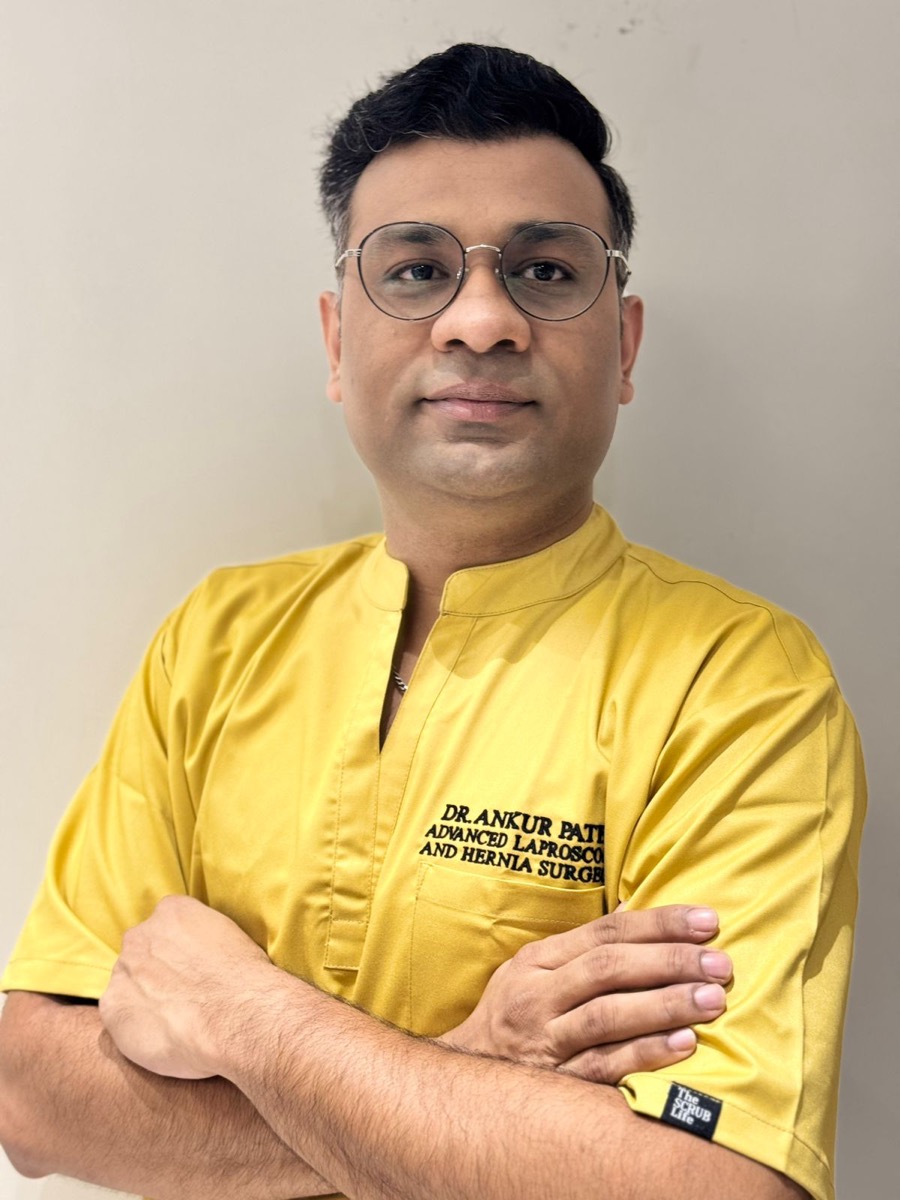
Dr. Ankur Patel
MBBS, MS (General Surgery), FMAS, FALS, DIPMAS, FACRSI
Dr. Ankur Patel is an advanced laparoscopic and robotic surgeon practising in Ahmedabad, with 15+ years of experience in minimally invasive and complex abdominal surgery. His work centres on hernia repair, gallbladder and appendix surgery, laser proctology and gastrointestinal procedures performed through keyhole techniques that shorten hospital stays and speed up recovery.
Read full profile →Medical disclaimer: This article is general patient education and is not a substitute for individual medical advice. Symptoms that seem similar can have very different causes, and only an examination can establish what is actually going on in your case. Please consult a qualified doctor and discuss your symptoms to better understand your condition and the right next steps for you. If you may be having a medical emergency, go to the nearest hospital.