
Laser Piles Surgery: What It Involves and Why Recovery Is Different
The dread most patients bring to piles surgery comes from stories about the traditional operation. Laser haemorrhoidoplasty works on a completely different principle — here is what that means in practice.
Most patients who arrive for a piles consultation have already decided that surgery sounds unbearable. That belief comes from somewhere real — the traditional open haemorrhoidectomy left raw wounds in one of the most sensitive parts of the body, and the recovery deserved its reputation.
Laser haemorrhoidoplasty works differently enough that the comparison largely does not hold. Understanding the mechanism explains why.
The key difference: no cutting of anal skin
In open haemorrhoidectomy, the pile mass is cut out. That leaves an open wound in the anal canal and at the anal verge, which has to heal from the base up over three to six weeks while stool passes over it daily. That is the source of the pain.
In laser haemorrhoidoplasty, nothing is cut out. A fine optical fibre is introduced into the pile through a pinhole opening, and laser energy is delivered inside the tissue. The heat shrinks the engorged blood vessels and causes controlled fibrosis, which does two things: the pile collapses, and the scar tissue that forms pulls the cushion back up into its proper position.
The sensitive skin at the anal verge is never incised. There is no open wound, and therefore nothing to pack or dress.
Who it suits
Laser haemorrhoidoplasty is most effective for grade II and grade III internal piles, which covers the majority of patients coming to surgery.
It is less suitable as a sole procedure for very large grade IV piles with substantial external components, where a combined or excisional approach may be needed. It can, however, be combined in the same sitting with treatment of external tags, a fissure, or a fistula — which is common, since around a third of patients have more than one condition.
The day of the procedure
- Admission in the morning, having fasted for six hours
- An enema, usually given the night before or that morning
- A short spinal anaesthetic in most cases — you are awake but completely numb below the waist. General anaesthesia is used if preferred
- Examination under anaesthesia first, so every pile column is graded accurately with the muscles relaxed and any coexisting fissure or fistula is identified
- The laser fibre is introduced into each pile in turn and energy delivered in controlled pulses
- External tags, if present, are trimmed
- A light dressing only — no packing
- The whole procedure takes twenty to forty minutes
- Observation for a few hours until you have passed urine and are comfortable, then home the same evening
The first week, honestly described
Expect a sense of fullness, pressure or urgency in the anal region for the first two to three days. This is the treated tissue swelling before it shrinks, and it is the main discomfort of the procedure. Ordinary painkillers manage it in the great majority of cases.
The first bowel movement is what nearly every patient dreads. With laser treatment there is no open wound for stool to pass over, and with the stool softeners and laxative started from the day of surgery, most people describe it as uncomfortable rather than severe. Warm sitz baths afterwards make a genuine difference.
Some bleeding is expected, usually light, and often more noticeable around days seven to fourteen as the treated tissue sloughs. This is normal. Heavy bleeding is not, and should prompt a call.
Getting back to normal
- Days 2 to 4: most desk-based patients return to work
- Days 7 to 10: those with physically demanding jobs, long driving or prolonged standing
- Week 1 to 2: bleeding and swelling settle; follow-up review
- Weeks 2 to 3: gym and heavier activity resumed once cleared
- Weeks 3 to 6: the fibrosed piles continue shrinking; the final result is judged at around six weeks, not at one
How it compares with the alternatives
It is worth being even-handed about this rather than presenting laser as universally superior.
- Versus banding: banding is simpler, needs no anaesthesia and is cheaper, but works only for grades I–II and often needs repeating. Laser handles grade III, which banding does not
- Versus stapler (MIPH): stapler surgery is better where the prolapse is circumferential and the whole ring needs lifting. Laser targets individual columns. Both are day-care with comparable recovery
- Versus open haemorrhoidectomy: open surgery has the lowest recurrence rate and remains the most definitive option for extensive grade IV mixed disease. Laser trades a small amount of that durability for a dramatically easier recovery
Risks worth knowing about
- Difficulty passing urine on the first day, particularly after spinal anaesthesia — usually temporary, occasionally needing a short-term catheter
- Minor bleeding as the treated tissue shrinks, typically in the second week
- Persistent urgency or a feeling of fullness for a couple of weeks
- Recurrence, particularly where constipation and straining continue
- Rarely, infection, or a residual skin tag that needs trimming later
- A small number of large grade IV cases go on to need a formal excisional procedure
What determines whether the result lasts
The procedure treats what is prolapsed now. Whether piles return depends almost entirely on bowel habit afterwards.
Fibre at 25 to 30 grams daily, two to three litres of water, toilet visits limited to a few minutes without a phone, not postponing the urge, and regular physical activity. Patients who sustain these have low recurrence rates. Those who do not, frequently return.
It is worth taking that seriously from the day of surgery rather than treating it as generic advice appended at the end of a discharge summary.
Need this assessed? Read the full treatment page for laser piles (haemorrhoids) treatment, or book an appointment at Dynamic Surgical Hospital, Ahmedabad.
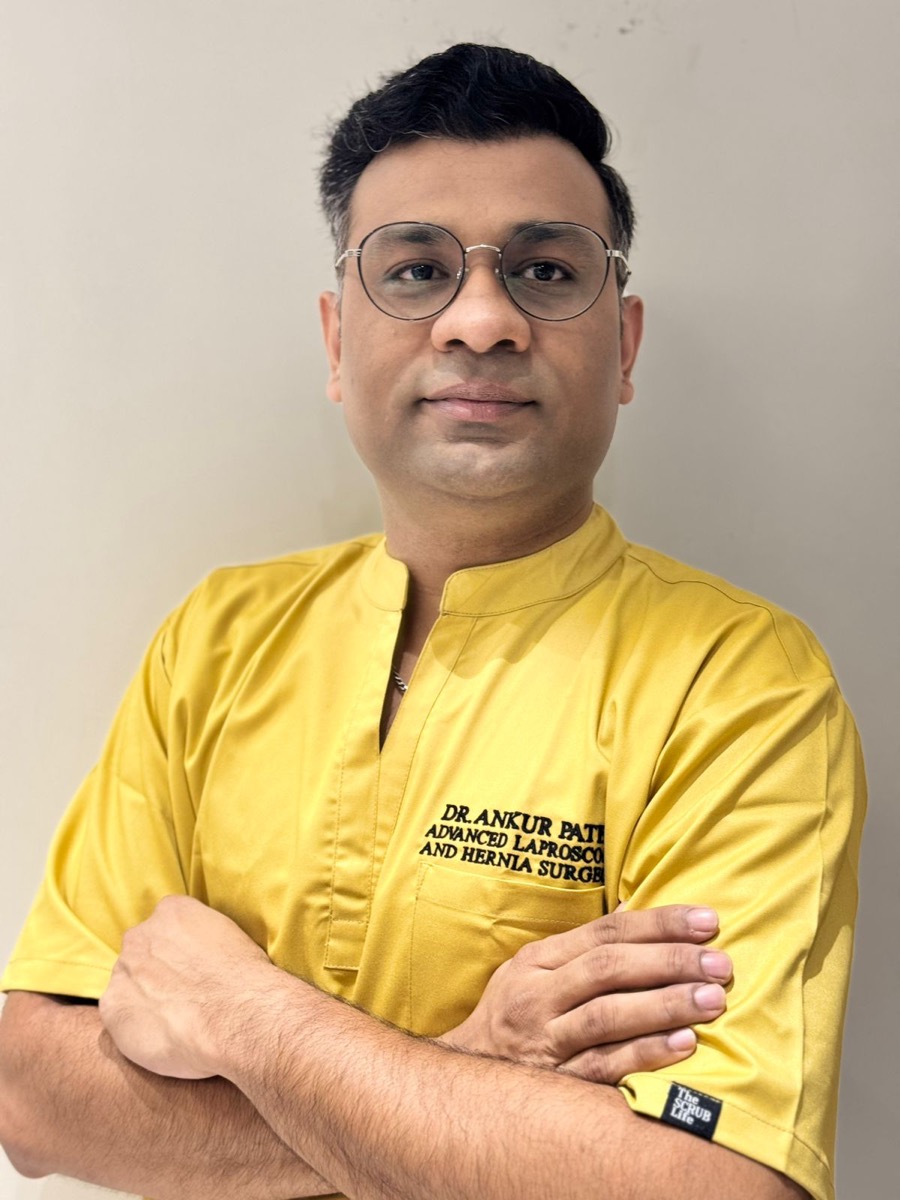
Dr. Ankur Patel
MBBS, MS (General Surgery), FMAS, FALS, DIPMAS, FACRSI
Dr. Ankur Patel is an advanced laparoscopic and robotic surgeon practising in Ahmedabad, with 15+ years of experience in minimally invasive and complex abdominal surgery. His work centres on hernia repair, gallbladder and appendix surgery, laser proctology and gastrointestinal procedures performed through keyhole techniques that shorten hospital stays and speed up recovery.
Read full profile →Medical disclaimer: This article is general patient education and is not a substitute for individual medical advice. Symptoms that seem similar can have very different causes, and only an examination can establish what is actually going on in your case. Please consult a qualified doctor and discuss your symptoms to better understand your condition and the right next steps for you. If you may be having a medical emergency, go to the nearest hospital.