Pilonidal Sinus: Why It Keeps Coming Back After Surgery
Few conditions frustrate patients like a pilonidal sinus that returns after an operation. The reason is almost always that the cause was never removed — only the result.
Pilonidal sinus has one of the highest recurrence rates of any minor surgical condition. Patients regularly present having had two, three or more procedures elsewhere, each time being told the sinus was completely removed.
In most of those cases the surgery was performed adequately. What was not addressed was the reason the sinus formed in the first place.
What actually causes it
The word “pilonidal” means “nest of hair”, and that is a precise description. Loose hairs — from the back, the head or the buttocks — collect in the natal cleft, the deep groove above the buttocks. The constant friction and movement of walking and sitting drives them, sharp end first, into the skin.
The body treats a buried hair as a foreign body. It mounts an inflammatory response, a cavity forms around it, bacteria colonise it, and a chronic infected sinus is established. The small midline pits that are visible are where hair enters.
This is not an infection that happened to occur there. It is a mechanical process that recurs as long as the mechanics remain unchanged.
The four reasons it comes back
- Hair continues to enter the area. If nothing changes about hair and friction after surgery, the same process starts again. This is by far the commonest reason
- A midline scar. The natal cleft is a moist, mobile, low-oxygen environment. Wounds and scars placed in the midline heal poorly and break down more often than scars placed off to one side
- The cleft remains deep. A deep cleft traps hair, moisture and debris. Procedures that excise tissue without flattening the cleft leave the trap in place
- Hair or debris left behind. If the cavity is not cleared completely at surgery, residual hair keeps the inflammation going
Why off-midline techniques give better results
This is one of the clearest findings in the surgical literature on pilonidal disease, and it changed practice substantially.
The traditional operation — excise the sinus and close the wound in the midline — has recurrence rates that are consistently higher than techniques that place the scar off the midline. The Karydakis and Limberg flap procedures do exactly that: they excise the disease, then mobilise healthy tissue to flatten the cleft and place the resulting scar laterally.
Flattening the cleft removes the pocket that traps hair. Moving the scar out of the midline puts it in a drier, less mobile, better-perfused area where it heals reliably. Together these address two of the four causes above.
For extensive or repeatedly recurrent disease, a flap procedure gives the lowest recurrence rate available.
Where minimally invasive techniques fit
Laser closure (SiLaC) and endoscopic treatment (EPSiT) work differently. Rather than excising a large block of tissue, they clean the cavity thoroughly — removing all hair and unhealthy tissue — then destroy the lining so the cavity collapses and seals.
The advantages are considerable: a wound measured in millimetres, no packing, no weeks of daily dressings, and a return to sitting and desk work within days rather than a month or more.
They suit primary and moderate disease well. For very extensive, multi-track or repeatedly recurrent sinuses, a flap procedure is generally the more durable choice. The honest position is that these are different tools for different presentations, not one superseding the other.
The aftercare that determines the outcome
This is the part that gets treated as an afterthought and should not be. In studies of recurrence, sustained hair control is among the strongest predictors of not recurring.
- Hair removal from the natal cleft and surrounding area, maintained for at least a year after surgery
- Laser hair reduction is considerably more effective than shaving. Shaving leaves short, sharp stubble that penetrates skin more readily than untouched hair, and several studies suggest frequent shaving may increase rather than decrease risk
- Keep the area clean and completely dry — moisture softens skin and makes hair penetration easier
- Avoid sitting for hours without a break; stand and move every hour
- Weight reduction where relevant, which reduces the depth of the cleft and the amount of moisture and friction
- Prompt attention to any new pit, discharge or swelling rather than waiting for a full-blown abscess
The pattern of who gets it
Pilonidal disease overwhelmingly affects young adults, more often men, and clusters in specific occupations — drivers, IT professionals, students, and anyone who sits for long uninterrupted periods. It was historically called “jeep driver’s disease” for exactly this reason.
Contributing factors are a deep natal cleft, coarse dense body hair, obesity, sweating and prolonged sitting. Interestingly, it becomes much less common after the age of about forty, which is thought to relate to changes in hair and hormonal factors.
What to do if you are on your second or third recurrence
- Ask for a proper assessment of the extent of the disease, including imaging if there are multiple tracks
- Ask specifically whether a flap procedure that flattens the cleft is appropriate for you
- Take hair reduction seriously as part of the treatment plan, not as advice to consider
- Address blood sugar, smoking and weight if relevant, all of which affect wound healing here
- Make sure any acute infection is fully settled before definitive surgery — operating on an actively infected field gives worse results
A realistic expectation
Recurrence rates in the literature vary widely, from single figures with well-selected flap procedures and good aftercare, to well above twenty percent with midline closure and no hair control.
That range says something useful: outcome depends heavily on choosing the right procedure for the extent of disease, and on what happens in the year afterwards. Both are within your and your surgeon’s control.
Need this assessed? Read the full treatment page for pilonidal sinus treatment, or book an appointment at Dynamic Surgical Hospital, Ahmedabad.
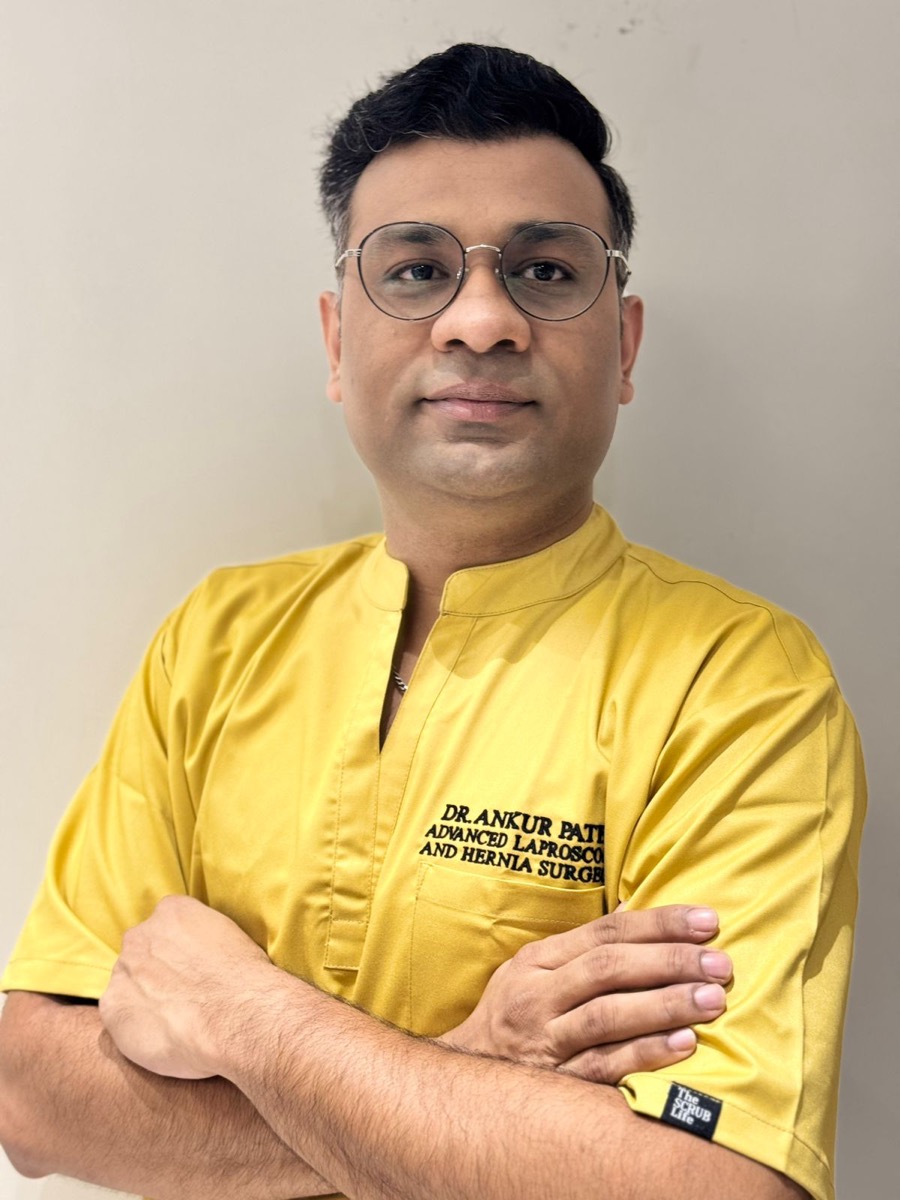
Dr. Ankur Patel
MBBS, MS (General Surgery), FMAS, FALS, DIPMAS, FACRSI
Dr. Ankur Patel is an advanced laparoscopic and robotic surgeon practising in Ahmedabad, with 15+ years of experience in minimally invasive and complex abdominal surgery. His work centres on hernia repair, gallbladder and appendix surgery, laser proctology and gastrointestinal procedures performed through keyhole techniques that shorten hospital stays and speed up recovery.
Read full profile →Medical disclaimer: This article is general patient education and is not a substitute for individual medical advice. Symptoms that seem similar can have very different causes, and only an examination can establish what is actually going on in your case. Please consult a qualified doctor and discuss your symptoms to better understand your condition and the right next steps for you. If you may be having a medical emergency, go to the nearest hospital.