
Life After Gallbladder Removal: Diet, Digestion and What Really Changes
Will you have to give up ghee forever? Will digestion be permanently different? A practical guide to eating and living after laparoscopic cholecystectomy.
The most common anxiety before gallbladder surgery has nothing to do with the operation. It is about food. Patients want to know whether they will be able to eat at weddings, whether ghee and fried snacks are off the table permanently, and whether their digestion will ever be the same.
The short answer is reassuring: the large majority of people return to a completely normal diet. But there is a transition period, and understanding what is happening makes it much easier to manage.
What the gallbladder actually did
The liver produces bile continuously — around half to one litre a day. Bile emulsifies fat so that enzymes can break it down. Between meals, the gallbladder stores this bile and concentrates it, then contracts when a fatty meal arrives, delivering a concentrated dose into the intestine.
Once the gallbladder is removed, the liver keeps producing bile exactly as before. What changes is the delivery: instead of a stored bolus, bile trickles continuously into the intestine.
For most meals this works perfectly well. Where it can fall short is a single very large, very fatty meal, where the concentrated bolus would have helped. And because bile is now arriving continuously, some people find that the excess reaching the colon loosens the stool.
The first two weeks
Keep meals small, frequent and low in fat. This is not because your body cannot cope, but because it makes the adjustment period comfortable.
- Eat five to six small meals instead of two or three large ones
- Choose khichdi, dal, rice, curd, upma, idli, steamed vegetables, clear soups and soft fruit
- Keep oil and ghee to a minimum — a teaspoon at a time rather than a tablespoon
- Avoid deep-fried food, heavy sweets, cream, red meat and rich gravies entirely for now
- Drink plenty of water
- Limit very spicy food, which is more about comfort than about bile
Weeks two to six — reintroducing fat
This is the part patients get wrong most often, in both directions. Some reintroduce everything at once on day fifteen and have a miserable few days. Others stay on khichdi for six months out of fear.
The right approach is gradual and systematic. Add one moderately fatty item at a time and see how you tolerate it. Start with things like a normal home-cooked sabzi with regular oil, then paneer, then a small portion of a fried snack.
Most people find that by week four to six they are eating essentially normally, and that the foods which give trouble are specific and predictable — usually very oily, deep-fried items in large quantity.
Why some people get loose stools
Somewhere between ten and twenty percent of patients notice looser, more frequent stools in the months after surgery, particularly after fatty meals. This is called post-cholecystectomy diarrhoea, and it happens because bile acids arriving continuously in the colon draw water into it.
In most people this settles on its own over three to six months as the bile ducts dilate slightly and the system adapts. Meanwhile, several things help.
- Increasing soluble fibre — oats, isabgol (psyllium husk), bananas, apples — which binds bile acids
- Keeping individual meals moderate in fat rather than having one very rich meal a day
- Avoiding caffeine on an empty stomach, which speeds up the gut
- Where symptoms are persistent and troublesome, a bile acid binder such as cholestyramine is effective and is worth asking about rather than simply tolerating
What should not happen
It is worth being clear about what is not an expected consequence of gallbladder removal, because these symptoms need proper assessment rather than dietary adjustment.
- Yellowing of the eyes or skin, dark urine or pale stools — this suggests a retained stone in the bile duct
- Severe upper abdominal pain identical to your original gallstone attacks, continuing after surgery
- Fever with abdominal pain in the weeks after surgery
- Persistent vomiting or inability to keep food down
- Weight loss that you did not intend
The long term
By six months, the overwhelming majority of patients eat without restriction and without thinking about it. There is no medication to take indefinitely, no supplement required, and no long-term dietary prohibition.
What is worth keeping is the general direction of the advice: moderate fat, regular meals, plenty of fibre and water. That was good advice before the surgery too — it is part of why gallstones formed in the first place.
A note on skipping meals
One habit worth abandoning is prolonged fasting or very irregular eating. Long gaps between meals allow bile to stagnate, and stagnant bile is precisely how stones form. This matters less once the gallbladder is gone, but for anyone with gallstones who has not yet had surgery, regular meals are genuinely protective.
Need this assessed? Read the full treatment page for laparoscopic gallbladder stone surgery, or book an appointment at Dynamic Surgical Hospital, Ahmedabad.
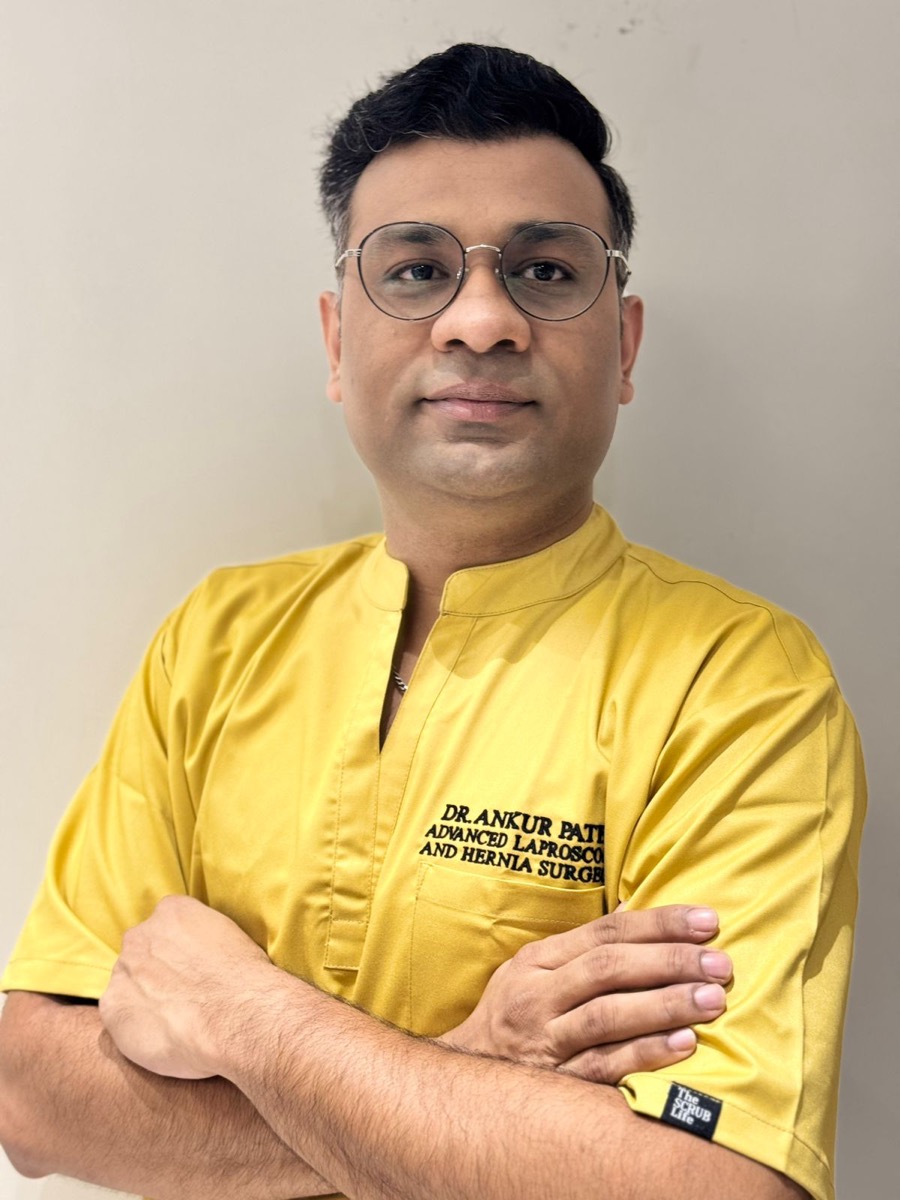
Dr. Ankur Patel
MBBS, MS (General Surgery), FMAS, FALS, DIPMAS, FACRSI
Dr. Ankur Patel is an advanced laparoscopic and robotic surgeon practising in Ahmedabad, with 15+ years of experience in minimally invasive and complex abdominal surgery. His work centres on hernia repair, gallbladder and appendix surgery, laser proctology and gastrointestinal procedures performed through keyhole techniques that shorten hospital stays and speed up recovery.
Read full profile →Medical disclaimer: This article is general patient education and is not a substitute for individual medical advice. Symptoms that seem similar can have very different causes, and only an examination can establish what is actually going on in your case. Please consult a qualified doctor and discuss your symptoms to better understand your condition and the right next steps for you. If you may be having a medical emergency, go to the nearest hospital.